Newsletter Subscribe
Enter your email address below and subscribe to our newsletter

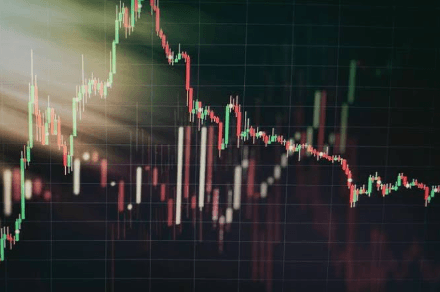
Crypto market volatility measures the size and frequency of price moves across digital assets over short horizons. It reflects liquidity shifts, leverage, microstructure nuances, and cross-asset correlations, and is quantified via daily returns, standard deviation, value-at-risk, and beta. Volatility informs risk tolerance, position sizing, and discipline rules, demanding data-driven monitoring and adaptive controls. The interplay of market structure and external news keeps volatility dynamic, raising questions about mitigation strategies as conditions evolve. Further analysis is warranted to unpack the implications.
Crypto volatility refers to the magnitude and frequency of price fluctuations within a short time frame, typically measured by metrics such as daily or intraday percentage changes and volatility indices.
The discussion assesses crypto dynamics and volatility mechanics, highlighting how liquidity, news flow, and leverage shape short-term moves, while emphasizing caution, data integrity, and the need for disciplined risk controls in uncertain environments.
Volatility metrics translate the abstract idea of price movement into actionable signals, enabling analysts to quantify risk and compare assets on a like-for-like basis. Crypto volatility metrics today include standard deviation, value-at-risk, and beta relative to benchmark indices, offering disciplined risk checks. They also consider market sentiment and liquidity, guiding decisions without overreliance on momentum or hype.
There are multiple, quantifiable drivers behind rapid price swings in crypto markets, ranging from macro liquidity conditions to microstructure dynamics.
The analysis emphasizes structured risk factors: liquidity shocks constrain order books and heighten movement, while uncharted risks reflect surprises in leverage, miner behavior, and cross-asset correlations.
These elements collectively shape volatility profiles, demanding cautious, data-driven assessment rather than overgeneralized forecasts.
See also: How Technology Is Changing Modern Manufacturing
The analysis tracks price trends with defined thresholds, backtests strategies under uncertainty amplification, and monitors liquidity gaps to prevent sudden losses.
Quantified risk limits, position sizing, and adaptive stop rules align with objective signals, supporting freedom-minded readers seeking measured exposure amid evolving market dynamics.
Crypto volatility can be quantified through metrics like daily returns, standard deviation, VaR, and beta, reflecting how quickly prices swing and how risk propagates across assets. In practice, traders calibrate position sizes, set adaptive stops, and monitor liquidity gaps to limit downside exposure. While correlations shift with news and leverage dynamics, a disciplined, data-driven approach remains essential. The market rewards preparedness, but surprisers can still test risk controls, so maintain conservative assumptions and verify models regularly. Proceed cautiously.